The sky goes to work
A whole new economy is taking shape just above our heads. Here is how it works, who is building it, what it costs and what it will change for ordinary people.
01Three minutes that decide everything
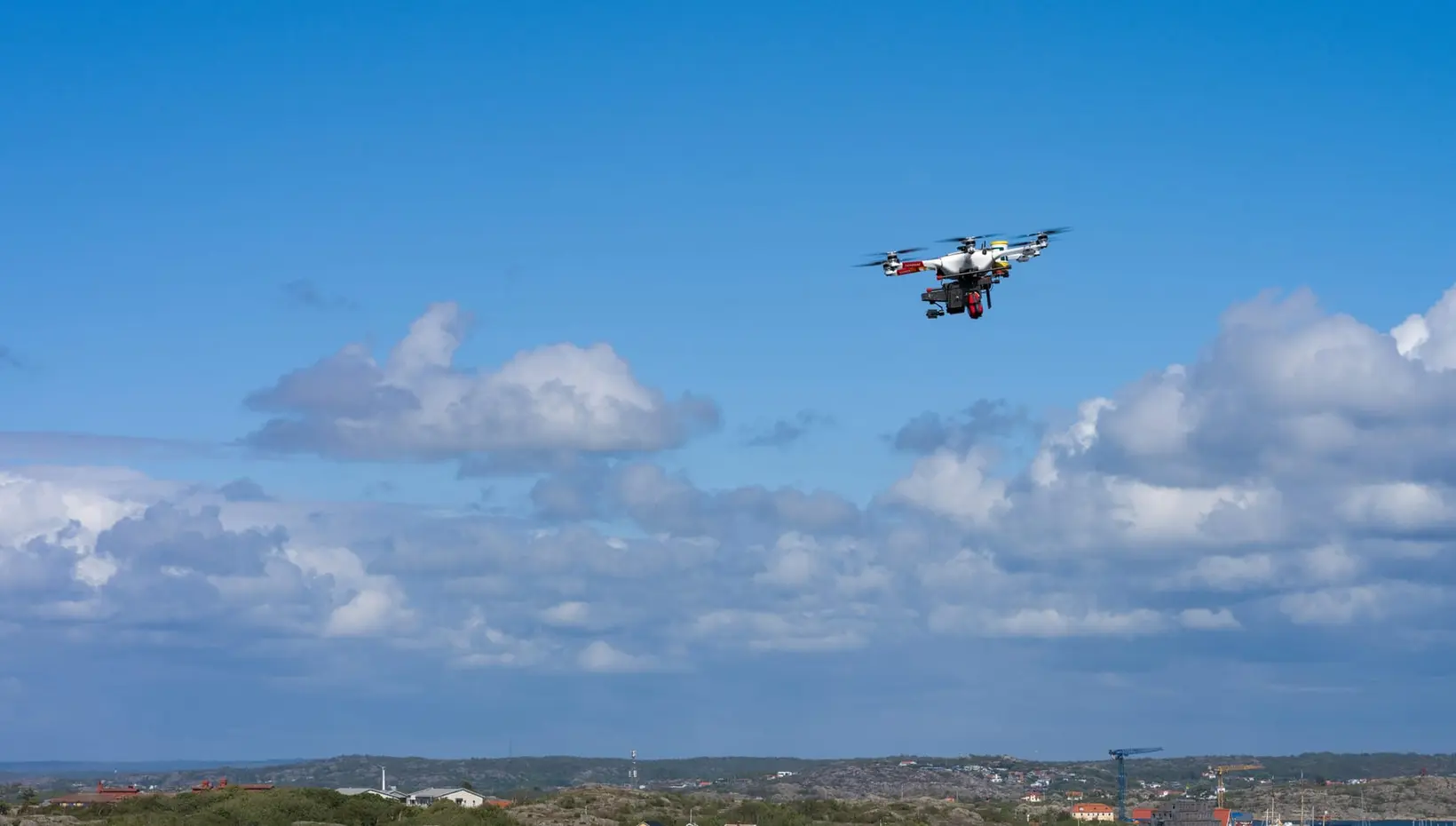
In December 2021, in the town of Trollhattan in Sweden, a man was clearing snow outside his home when he collapsed: cardiac arrest. While the ambulance was still on its way, a drone flew to him and lowered a defibrillator on a winch. From the call to the device in hand, a little over three minutes passed. A doctor happened to be passing on foot. The man survived. It was the first time anywhere that a device delivered by a drone has been directly linked to a life saved.
This is not a film and not the future. It is already working, right now, in an ordinary suburb. And it is only one frame from a much larger picture that almost no one sees whole. The few hundred metres of air above our heads stayed empty for thousands of years: birds, clouds, the occasional aircraft far above. Today, for the first time, that space is turning from emptiness into a place of work.
Into it go machines that carry blood and lunch, spray fields, search for people lost in the mountains, paint pictures from thousands of lights above a celebration, inspect bridges and power lines, fight fires and even carry passengers. All of it has acquired a common name: the low-altitude economy. Part of it has already become an everyday tool and works every day. Another part is still a promise that whole states are fighting over. Working out where the real thing ends and the marketing begins is the interesting part.
02What this actually is
At its simplest: the low-altitude economy is everything useful that people have learned to do in the air close to the ground, together with the whole industry around it. Courier drones and crop-spraying drones, air taxis, airships, shows made of thousands of drones, and alongside them the factories that build all this, the pads for take-off and landing, the software that keeps the machines apart in the air, the laws, the insurance and the people who operate it all.
The word economy is there for a reason. A single drone is just a tool. But once everything else appears around it, from landing pads and a traffic-management system to permits, insurance and trained operators, the sky stops being empty space and becomes infrastructure, the way roads or the railway once did. And on infrastructure you can build a business.
Where the line falls
There is no single height at which this economy ends. In China people usually talk about the air below 1,000 metres; in the United States and Europe the ceiling for small drones is around 120 metres; and stratospheric communications craft hang at 20 kilometres. So it is better to think not of a precise line but of a layer of work: from the low city sky up to the bottom of ordinary aviation.
When people hear "the low-altitude economy", almost everyone pictures flying taxis. But taxis are only a small and, so far, the least mature part of it. The core of this economy is wider and more down to earth: delivery, farming, rescue, inspection, filming, communications. These dull-sounding things already make money and save lives, while the taxi is still getting ready to take off.
03How we got here
This new economy has surprisingly old roots, and it came together in three waves.
First, the dream of simply getting off the ground. On 4 June 1783 the Montgolfier brothers in France raised a hot-air balloon in front of a crowd for the first time; within half a year a person flew. For the next century and a half the sky belonged to balloons and airships, and even then the first commercial sense of flight appeared (a view of the ground from above) and the first advertising in the sky (branded airships with a company name on the hull).
Then, control at a distance. As early as 1898 Nikola Tesla showed a boat he steered by radio. From that idea grew radio-controlled models, military target drones (hence the word "drone") and then unmanned aircraft.
And finally the real leap: the smartphone. Tiny motion sensors, navigation, light batteries and cameras were made cheaply and in huge numbers for phones, and then fitted to a flying frame. Around 2010 the Chinese company DJI (founded by a student in a Hong Kong dorm room) released a drone you could take out of the box and fly straight away. The quadcopter became as ordinary as a camera. The sky opened not for armies but for everyone.
After that everything sped up. In 2013 Amazon promised parcel delivery by drone, which at the time sounded like a fairy tale. But the first thing to fly was not a parcel but blood: in 2016 Rwanda launched the world's first national drone-delivery service. At about the same time the drone show was born: in 2012 in Linz, Austria, a swarm of glowing drones drawing shapes took to the air for the first time. And the whole phenomenon was named by China: the term "low-altitude economy" appeared around 2009 at an industry seminar, entered a state plan in 2021 and in 2024 was named in the government's main report as a new engine of growth. Outside China there is no single term like it, and that matters for counting the money, which we will come back to.
04What it is made of today
This is not one market but a whole bouquet of very different occupations, joined by one thing: they all work low over the ground. Let us go through the main ones.
Delivery: from blood to lunch
The most mature part, and it began with saving lives.
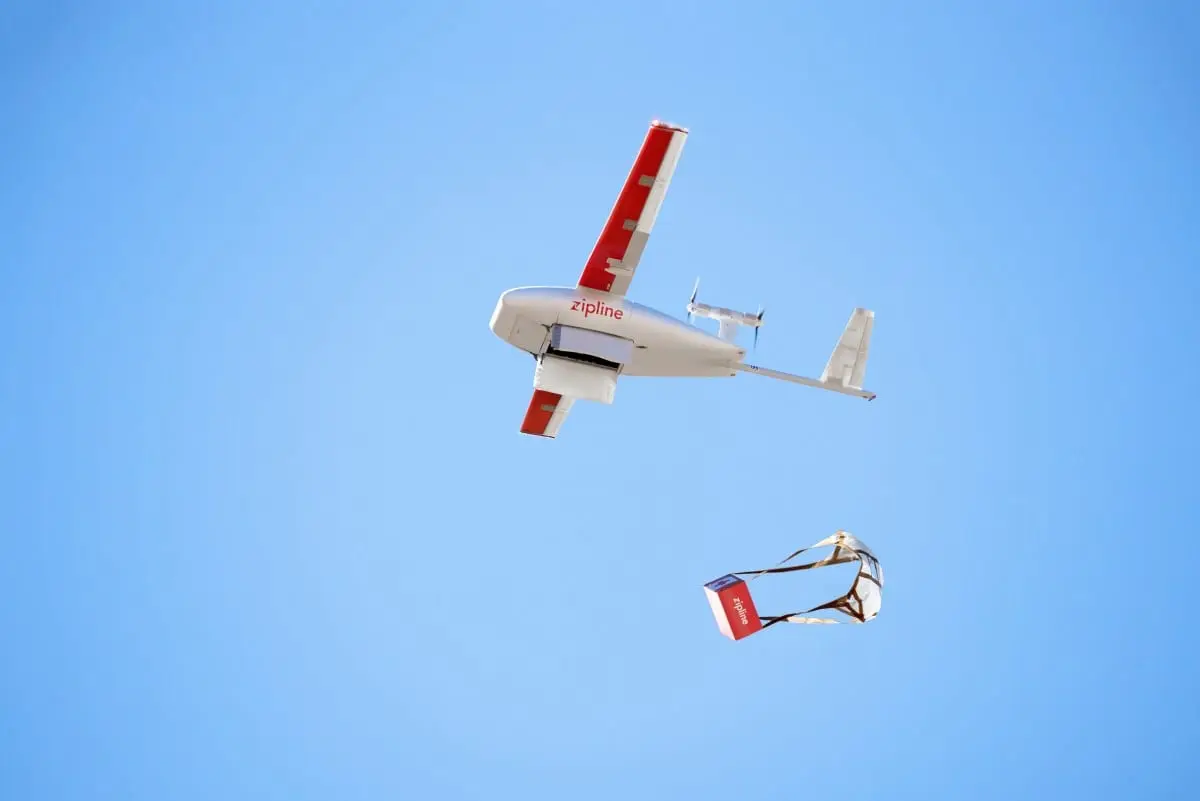
Rwanda, December 2016. A small girl named Ghislaine urgently needs blood, and over the broken roads the journey would have taken four to five hours. A Zipline drone brought it in 15 minutes. TIME magazine wrote that the girl became "the first person in the world to owe her life to a drone delivery". A technology that began by saving children in Africa now also carries takeaway lunches to a suburb of Houston.
Since then delivery has become routine. By mid-2026 Zipline, by its own figures, had made about 2.5 million deliveries, now at a rate of roughly one flight every 30 seconds. The cost of a single delivery has fallen from around $300 in 2016 to about $12. In the United States, drones from Zipline, Wing (part of the Google group) and Amazon drop medicines, food and goods across the suburbs. In China, the Meituan service has turned the roof of a shopping centre into an "airport" for drones, and food arrives in a city park in nine to 15 minutes.
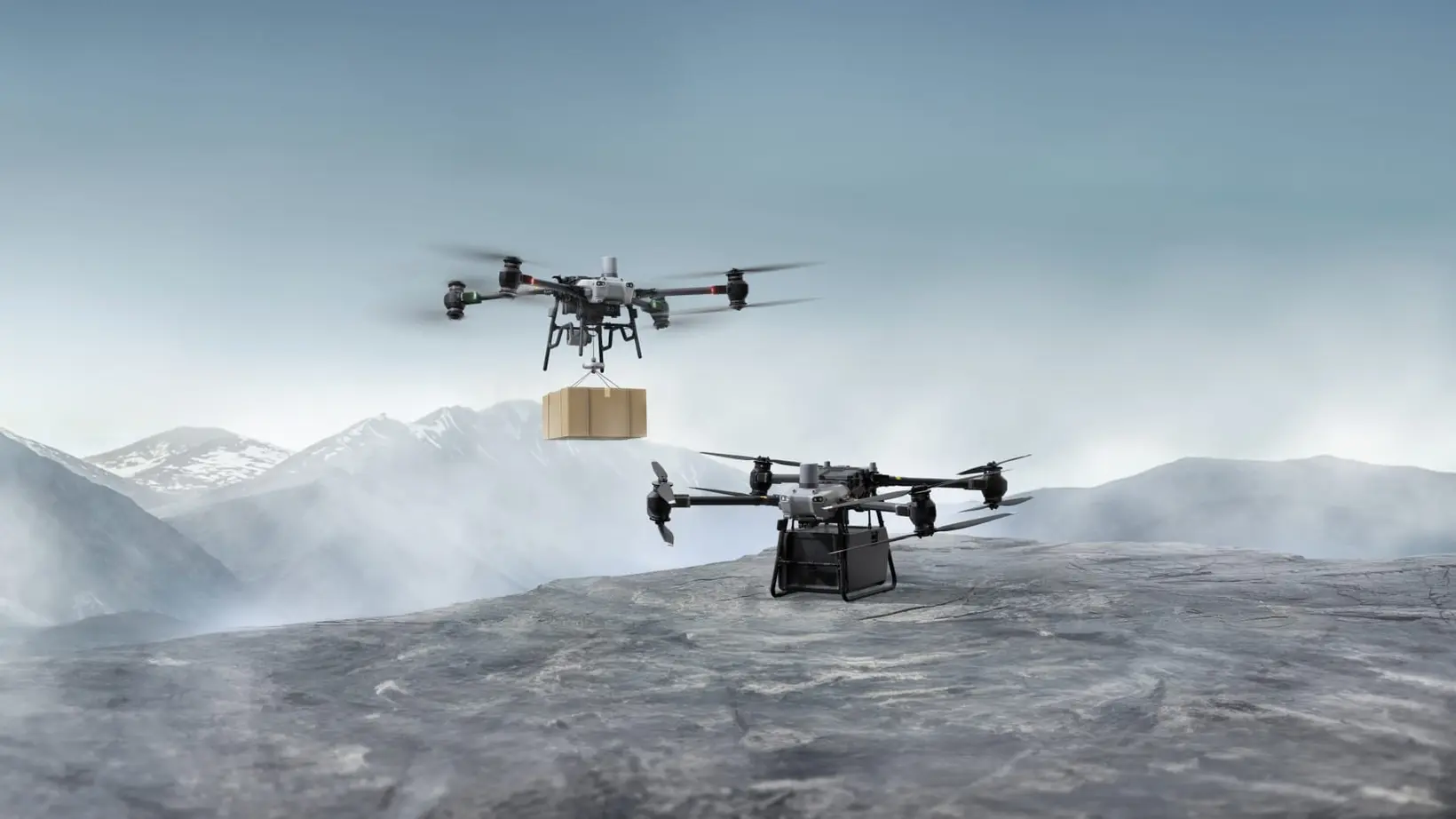
On the famous Yellow Mountains in China, loads were carried to the summit on human backs for centuries. Now cargo drones do it: a run to the top with a full load takes 17 minutes instead of a climb of several hours. Robots and a monorail were tried; drones were chosen, because they were cheaper.
And sometimes a drone carries the thing a life depends on directly. In September 2021 in Toronto a drone flew donor lungs from the roof of one hospital to the roof of another in six minutes, the first case of its kind in the world. The heart and lungs survive outside the body for half as long as a kidney, and for them minutes decide everything.
Fields: the quiet work no one notices
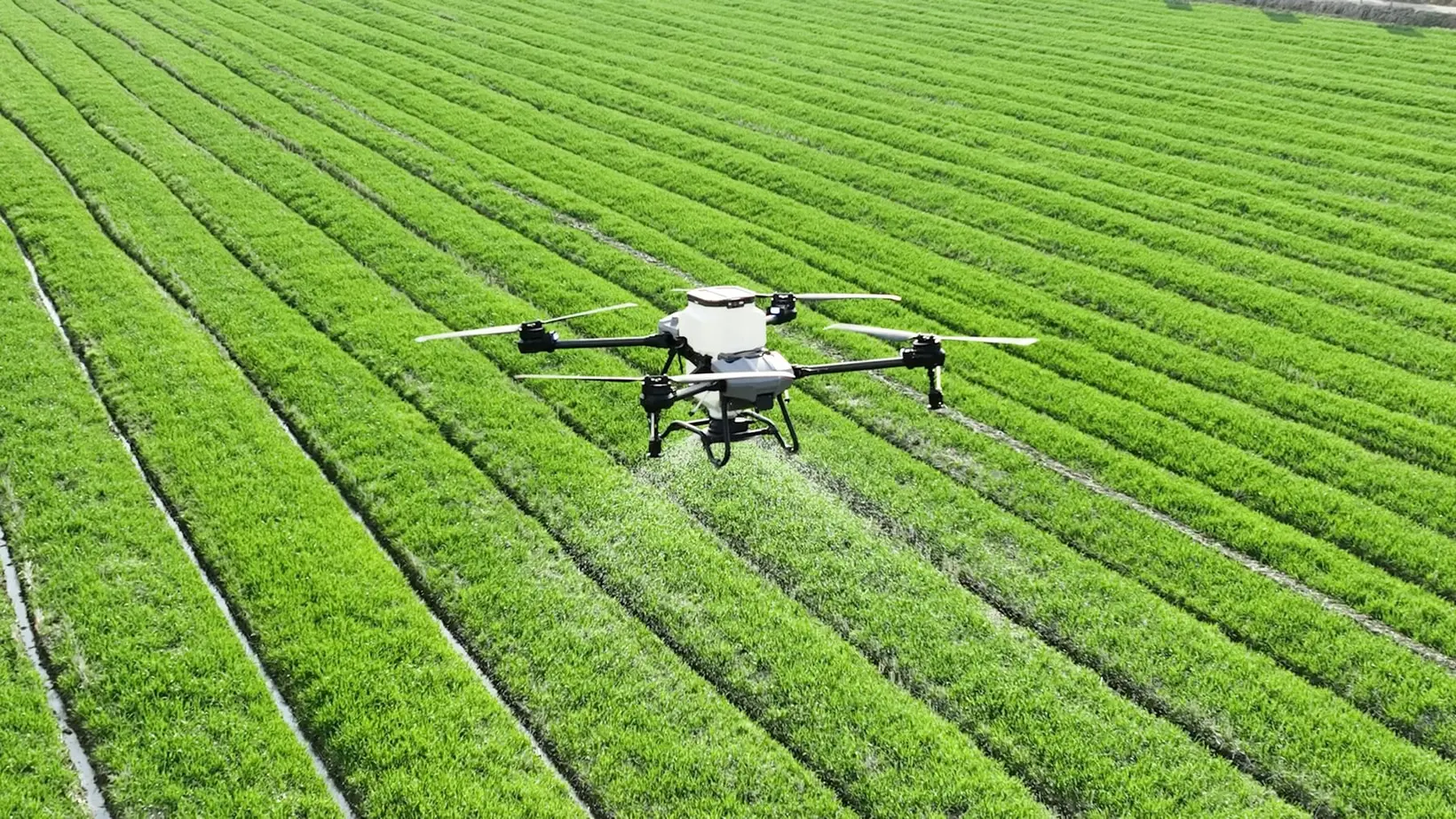
While everyone argues about taxis, the most widespread work drones do is over fields. They spray crops, scatter seed and fertiliser, count the harvest and the livestock, more precisely and more safely than a tractor, and with less water and chemistry. The market leader, China's DJI, says its agricultural drones have together treated more than 500 million hectares in over 100 countries. In China itself, agricultural drones account for about 98 per cent of all drone flight hours: the fields fly more than the whole of the rest of the low-altitude economy put together.
But here is the first honest conflict. In Argentina, individual courts have begun to ban spraying by drone near homes: after a case in which a child was found to have suffered harm to their health, a judge temporarily stopped the flights, and there are still no nationwide rules for this. What saves chemistry over a huge field becomes a threat over someone's yard. This is the first of many points where the sky runs up not against technology but against people.
Rescue: when minutes count
We began with this: the Swedish defibrillator in three minutes was not an exception but a sign of a whole field. Thermal-imaging drones with artificial intelligence search for people lost in mountains and forests. In Canada one found a hiker two kilometres away; in Switzerland a drone finds a person by their phone's signal even where there is no mobile coverage. In Australia drones patrol beaches and watch for sharks, and drop a rescue float to a swimmer in 70 seconds instead of several minutes.
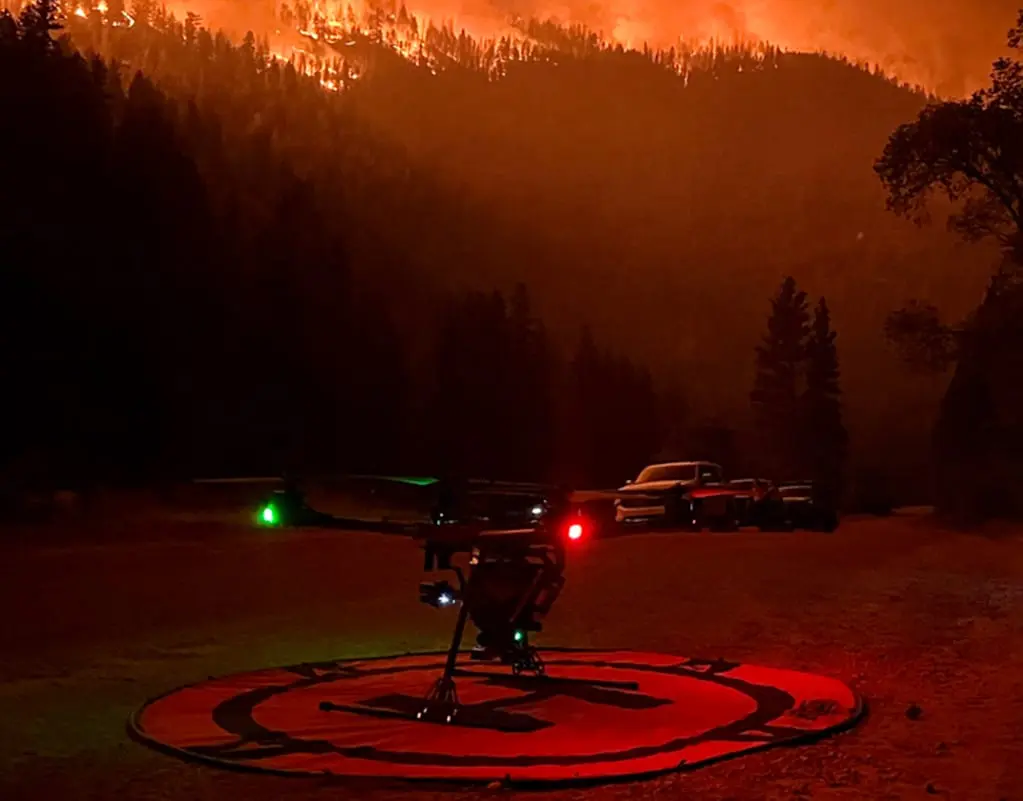
The most unexpected way to fight fire: the drone does not put it out, it lights it. A system with the telling name "dragon eggs" drops hundreds of balls that ignite once they are on the ground, and this is how firefighters burn counter-lines, so that a big fire has nothing left to feed on. And NASA is building a system that will let drones see one another in smoke and darkness: night is the best time to fight fire, but it is at night that ordinary aircraft go blind and land.
Emotion in the sky: the show you cannot scroll past
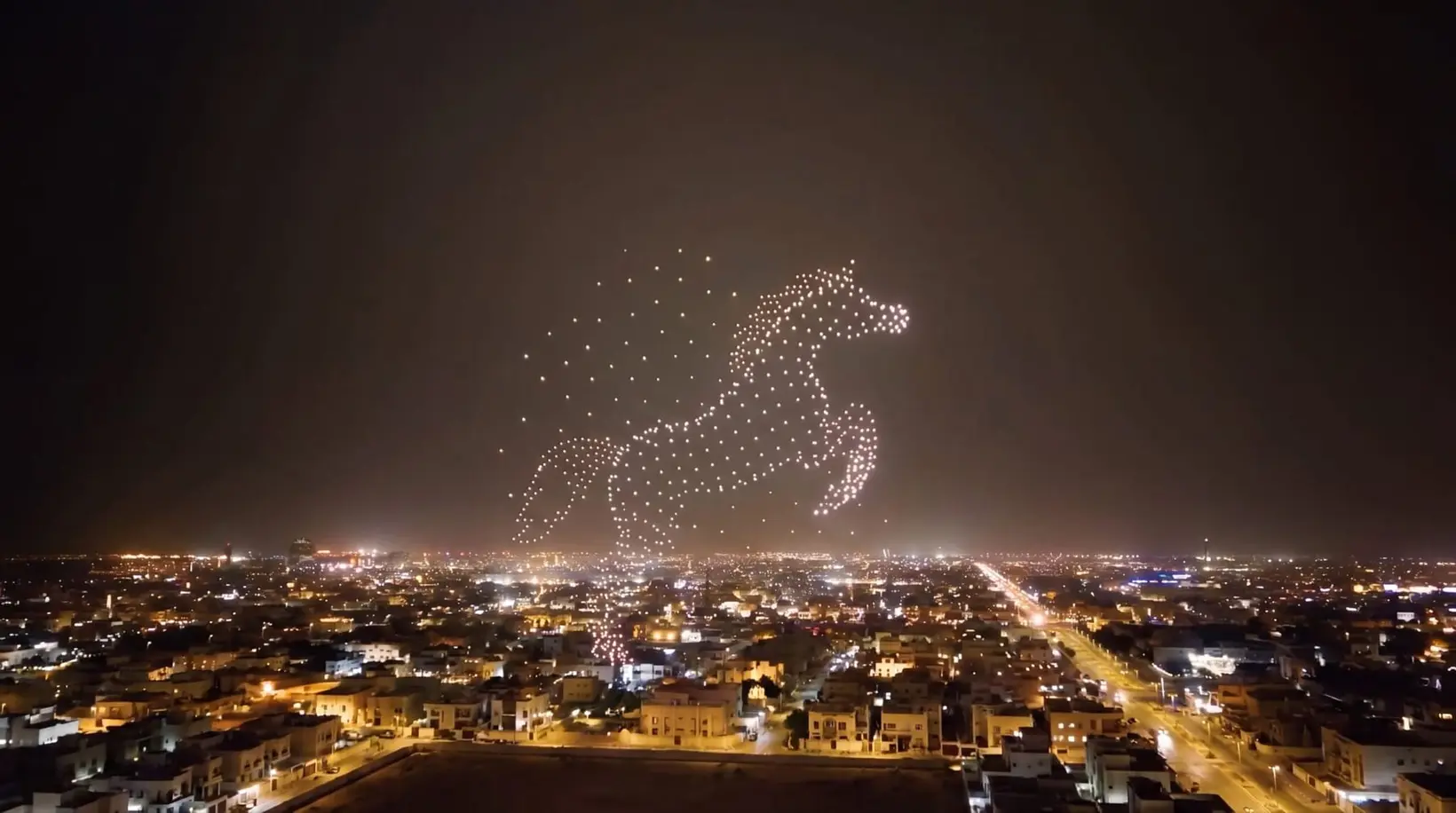
This is the part most often seen live, and it is our territory at DRONICO. Swarms of thousands of synchronised drones draw three-dimensional pictures and living scenes in the night sky. The records come one after another: in May 2026 over Dujiangyan in China, 33,615 drones took to the air and set several Guinness World Records at once. Over the Bosphorus, for the centenary of the Turkish Republic, exactly 2,023 drones went up, the number of the year.
And then the sobering side. In Vietnam a record show of more than ten thousand drones had to be stopped in a hurry: some of the machines lost signal and fell towards the audience, and the next show was cancelled. In this industry reliability matters more than the number of drones, and for us that is not an abstraction but daily work.
Eyes and data: what already pays its way
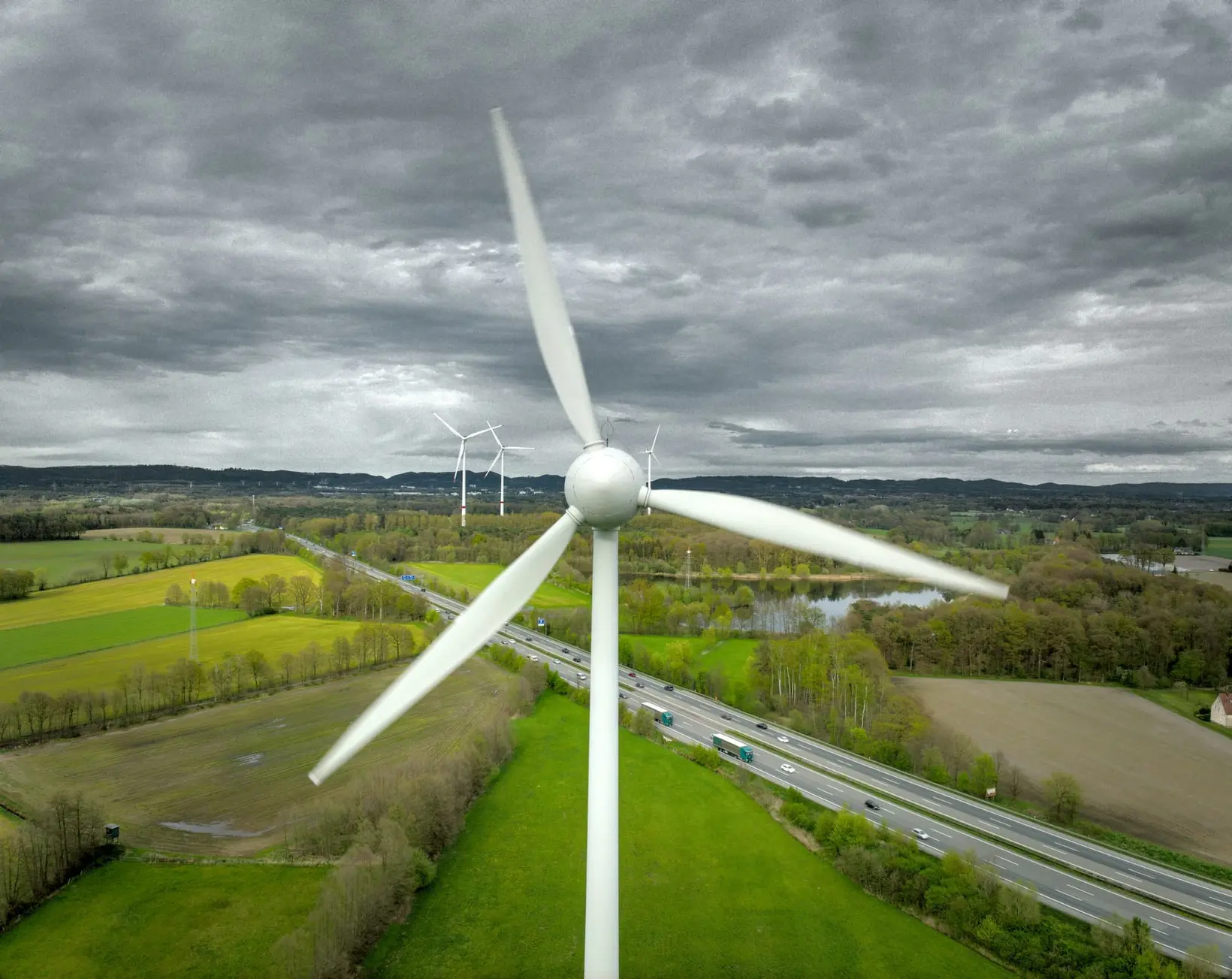
A vast segment, invisible to the ordinary person. Drones inspect power lines, pipelines, bridges and wind turbines, without stopping the work and without putting people at height. They find gas leaks with a laser beam in minutes. At copper mines in Peru, fleets of drones build three-dimensional models of the pits and count the ore instead of sending people into dangerous places. This is no longer an experiment but a routine working tool, and it is on this, not on taxis, that a noticeable part of this whole economy rests.
Unexpected roles: nature, health, history
One and the same trick solves two opposite problems. In Fiji, mosquitoes carrying a special bacterium that stops the dengue virus multiplying are released into the air, to protect people. In Hawaii, capsules of male mosquitoes are dropped from the air so that females lay unviable eggs, to save vanishing birds from imported malaria (for now this is done mostly from helicopters, with drones being tested).
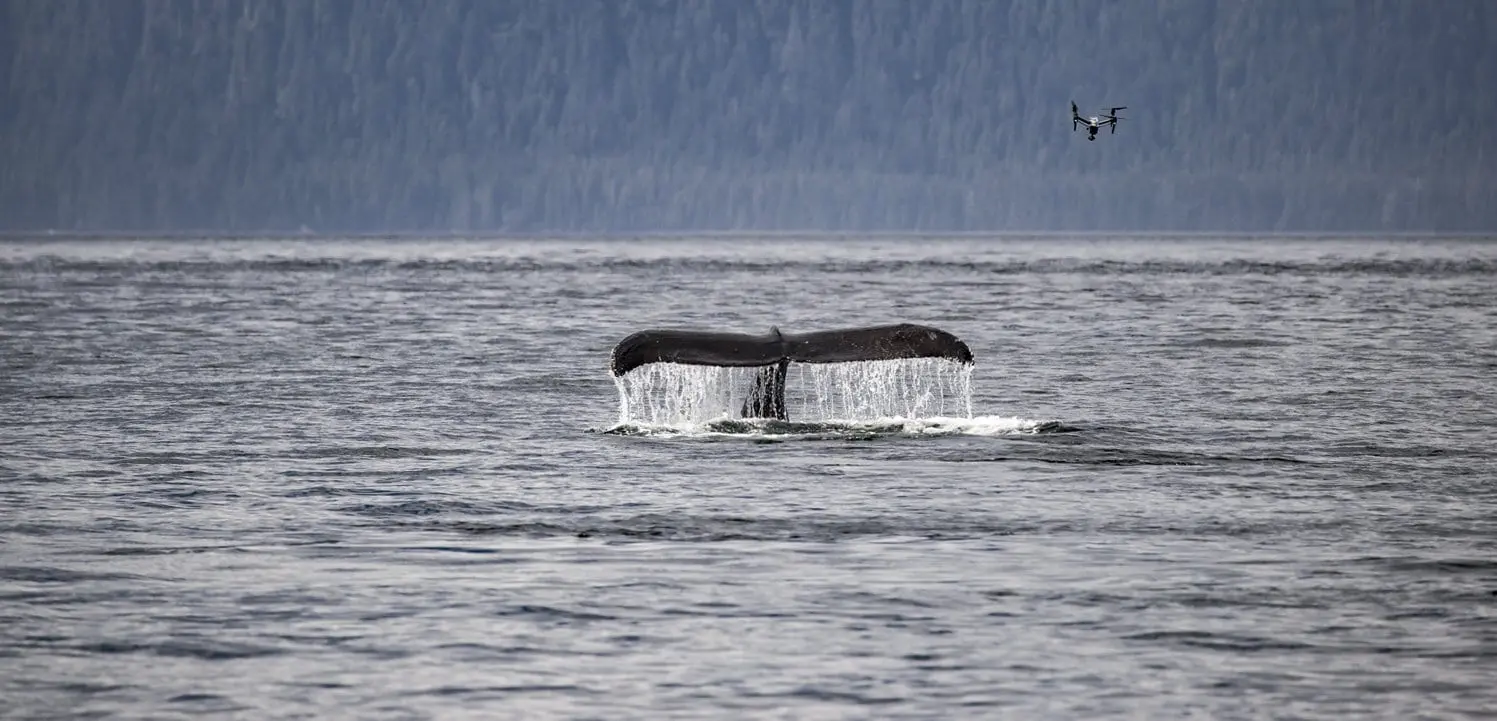
Thermal drones guard rhinos from poachers in South Africa and watch elephants by night in Kenya. A drone nicknamed the "snot bot" hovers over a whale's blowhole and catches its breath, which holds DNA and hormones that used to be collected by firing a dart into the whale. Others dive into a volcano's crater to measure the gas where it is dangerous for a person to go. And in Ukraine, drones with thermal cameras map minefields, work where a single wrong step costs a sapper their life.
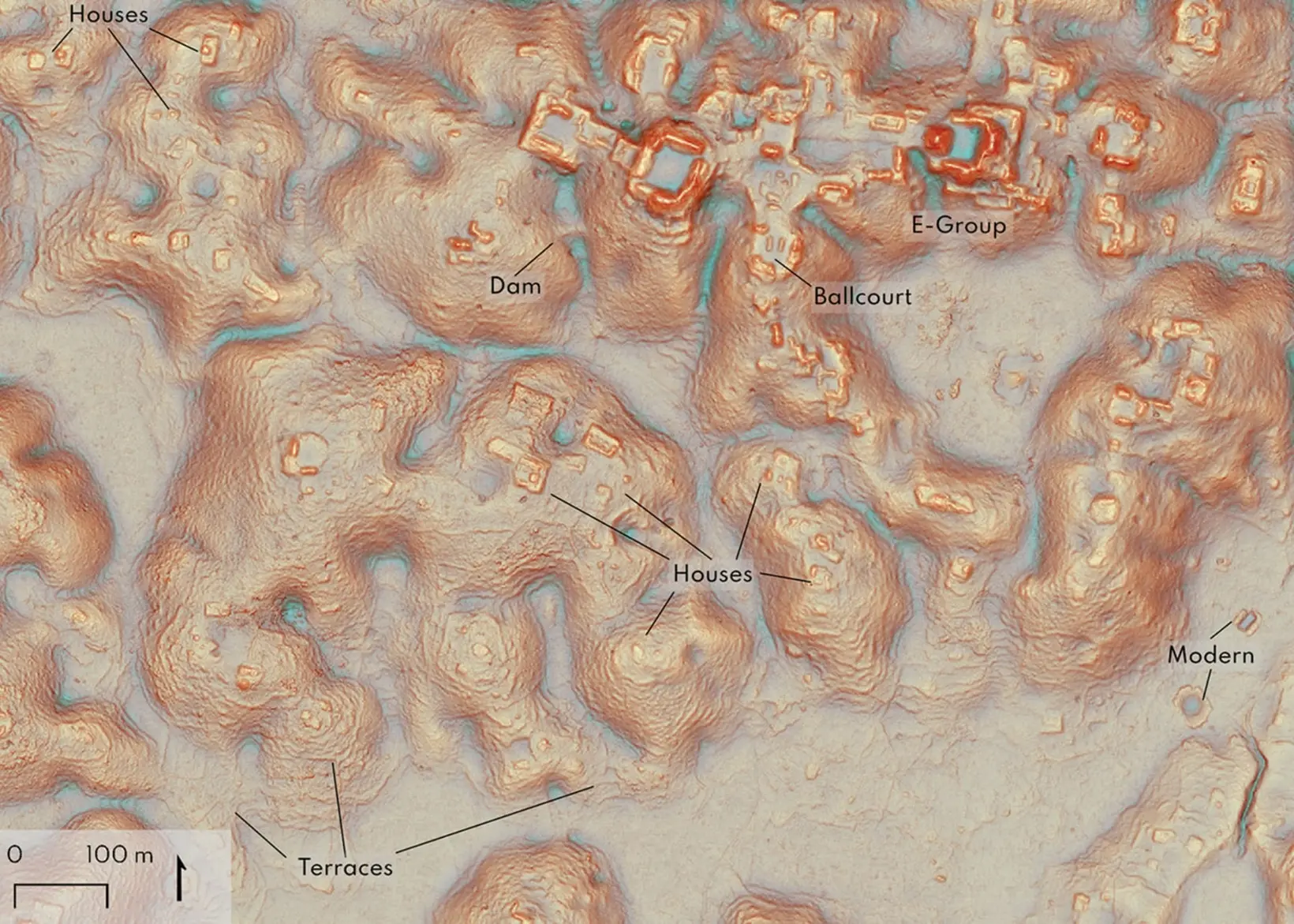
And one more remarkable story, about the view from above. In 2024 a researcher, going back over old airborne laser-scanning data, discovered a huge lost Maya city under the jungle canopy in Mexico, with thousands of structures. This method, lidar, strips away the trees with a beam and shows what the forest had hidden for centuries; it is flown both from aircraft and, more and more, from drones.
Air taxis: the dream slowly coming down to earth
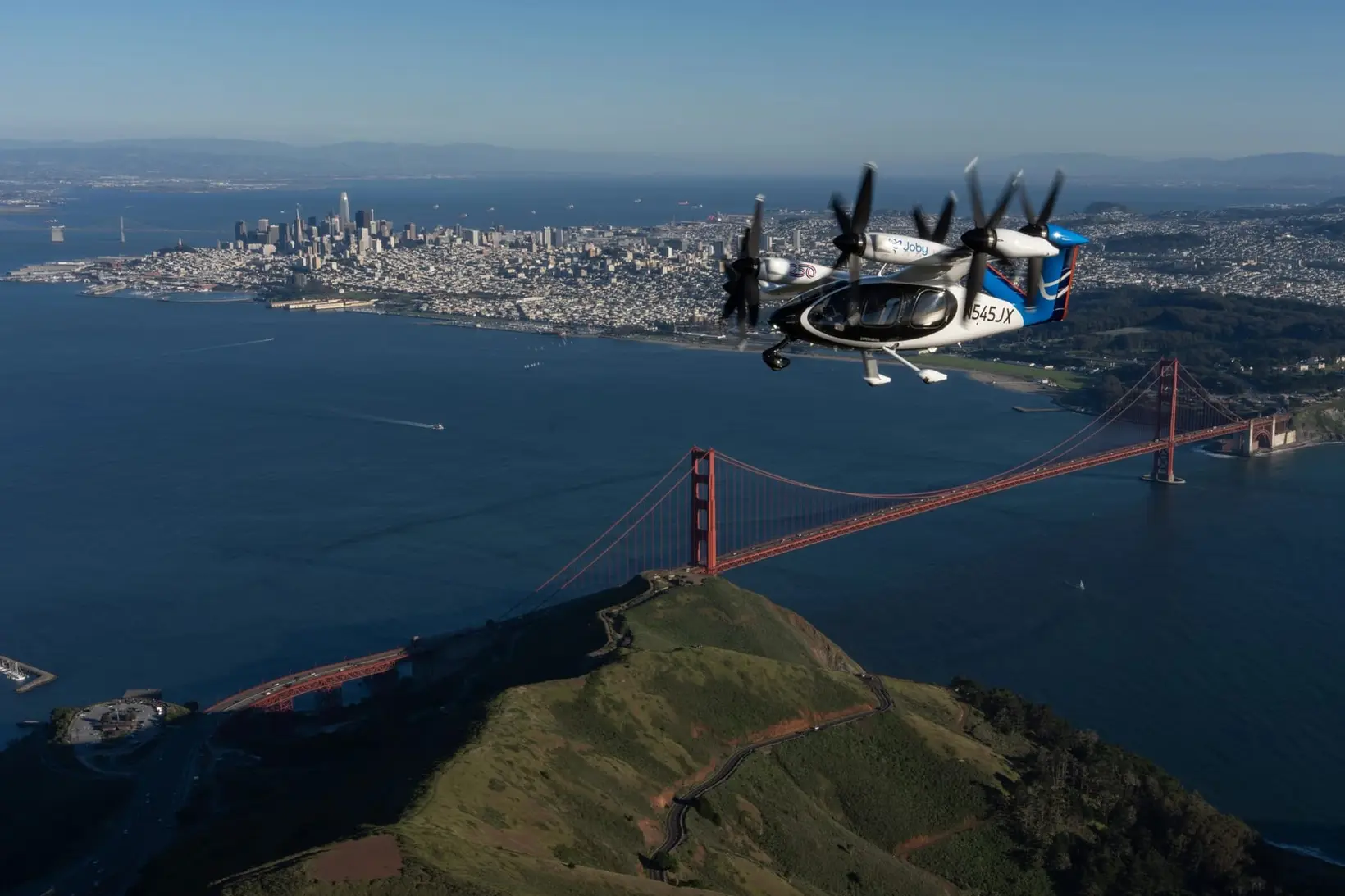
And here it is, the part about "flying cars". Electric vertical take-off and landing craft (called eVTOL) are meant to carry one to five passengers across a city in minutes. This is the most hyped and the hardest part of the low-altitude economy.
In places it is already real, if tiny. In China the uncrewed two-seat EHang air taxi takes people over a park in Guangzhou, with no wheel and no pilot in the cabin. But even the leader does not have it easy: in 2026 the company withdrew its revenue forecast because of uncertainty over permits, and its flights are better described as limited sightseeing rides than a city network. In Dubai, pads for the first permanent route have been built and certified, but there is as yet no commercial service with passengers. The honest answer: in most of the world there is still no full city network you can summon from your phone, and the timelines keep slipping.
05Who is building it: a map of the world
The most common question is who is ahead. And the answer is more honest than it seems: there is no single leader. The lead splits by segment, and each country has its own.
| Segment | Ahead | By what exactly |
|---|---|---|
| Policy and manufacturing | China | DJI makes about 70 per cent of the world's civil drones; the low sky is a separate line in the five-year state plan |
| Passenger taxis today | China | EHang is the only certified passenger eVTOL selling tickets (uncrewed, sightseeing flights only) |
| Strict certification | United States | FAA approval helps a company enter other countries' markets: a weighty, though not automatic, pass |
| Volume of cargo delivery | United States | Zipline, Wing, Amazon: millions of real flights to real homes |
| Readiness to launch taxis | UAE | the infrastructure for the first permanent route is built and certified (no passengers carried yet) |
| National medical delivery | Rwanda, Ghana | a working nationwide network that neither the US nor the EU has |
| A single rulebook | European Union | the world's first common drone regulation, a model others follow |
China - scale and a state bet
China is ahead on several fronts at once: it was the first to make the low sky a state priority, it makes about 70 per cent of the world's civil drones, and it holds the only working uncrewed passenger taxi. It has 3.29 million registered drones, and their flight hours grew by 70 per cent in a year. The flip side: in 2026 China itself eased off, tightening safety oversight. Even for the leader, the path from a certificate to regular flights goes carefully.
The United States - delivery and strict certification
America is strong in two things: the volume of real delivery, and a strictness of certification that other countries' regulators respect. The country has 837,000 registered drones and nearly 482,000 certified pilots. There is a brake too: the key rule on flights "beyond visual line of sight", on which mass delivery depends, is stuck in approvals and, by the time this article was prepared, had still not come out. Tellingly, the air-taxi leaders Joby and Archer aim to launch passengers in Dubai before they do at home.
Europe - the author of the rules the world flies by
Europe did the thing that turned out to be harder than any machine: it was the first in the world to write common rules for drones and safety criteria for air taxis, and regulators across the world now take their lead from them. With the aircraft themselves the road proved harder than expected: the race for funding is fierce, and some of the loud air-taxi projects, Germany's Volocopter and Lilium, did not survive it, while Airbus took a pause. But where the technology already does good, Europe is strong: its sky is held up by cargo and medical drones, from Swedish defibrillators that save lives to Swiss delivery of test samples between hospitals and parcels in Darlington in England. The strong engineering school has not gone anywhere: it is looking for a sustainable economy rather than a loud launch.
The rest of the world - each with its own part
- Africa reversed the usual order. Rwanda and Ghana have a national drone-medicine service that the rich countries still do not, because the drone replaced the roads that were not there, the way mobile phones once replaced the landline. In 2025 the US awarded Zipline a grant of up to $150 million to expand across five countries on the continent.
- Australia was the first to make delivery an everyday habit. Here drones carried shopping straight into back yards for years, and it was its honest experience that showed the whole industry how hard it is to make such delivery pay: not every project manages it.
- India is going for scale. Nearly 40,000 drones and as many pilots, with drone delivery markedly cheaper than by road. A large "drone for rural women" programme is rolling out more slowly than planned, but the sheer ambition of the idea shows what the country is betting on.
- Türkiye has one of the world's largest pools of pilots (counted in the millions) and its own "drone highways" for autonomous corridors.
- Israel has the most advanced experience of dense urban delivery; Canada delivers to northern communities with no roads; Kazakhstan drives locusts off hundreds of thousands of hectares with drones; Azerbaijan uses them to clear mines in Karabakh.
06What it costs, and where it is heading
Now for the money, plainly. And the first thing to say: there is no single global figure for the low-altitude economy. It is a Chinese term; in the West no one counts such a combined market, and there air taxis, commercial drones and delivery are measured separately. So any figure for "the whole world is worth so much" is either a Chinese estimate or a sum of pieces that everyone adds up in their own way. And those pieces are valued with an enormous spread: the same firm, in different reports, comes out with anything from three to fifty-five billion.
The most reliable guide comes from China, because it is state institutions doing the counting. In 2023 the sector there was valued at about 506 billion yuan (around $70 billion). The official target is 1.5 trillion yuan by 2025 and 3.5 trillion (about half a trillion dollars) by 2035. That is a target and a forecast, not an accomplished fact.
| Market | Estimate | How reliable |
|---|---|---|
| Low-altitude economy, China | 3.5tn yuan (2035 target) | an official target, not a fact; the order of magnitude is stable |
| Commercial drones, world | $20-55bn (by 2030) | a range; depends on what you count |
| Inspection drones | $26-38bn (by 2030) | a large, mature segment |
| Counter-drone | $14-20bn (by 2030) | mostly defence |
| Agricultural drones | about $10bn (by 2030) | fast growth, but essentially one firm counting |
| Drone delivery | $4-5bn (by 2030) | here the estimates converge (some give up to $33bn) |
| Drone shows | $0.8-2.4bn (by 2030) | the shakiest; they differ by more than eight times |
| Air taxis, world | $1tn (2040 forecast) | a 2021 Morgan Stanley estimate |
That is the main conclusion about the money. Investment in air taxis deflated from a peak of $6.8 billion in 2021 to about $4 billion by 2023, and the share price of the main air-taxi makers fell by 70 to 80 per cent over the past couple of years. The delivery companies, by contrast, grew more valuable on the private market. What already works and is already useful, from delivery and inspection to agriculture and filming, is what investors believe in. They are more cautious about the dream of the mass air taxi: it is taking too long to reach the market.
| Country | Registered drones | Certified pilots |
|---|---|---|
| China | ~3.29 million | ~415,500 |
| United States | 837,513 | 481,760 |
| Brazil | 154,077 | - |
| Türkiye | 88,138 | in the millions |
| India | ~38,500 | 39,890 |
07What stands in the way, and it is not the technology
It is easy to think it all comes down to technology, to batteries, to autopilots. But remember the Argentine yard, over which a judge banned the drone: the main obstacles turned out to be human, not engineering.
- Rules and permits. Letting a machine fly over people is far harder than building it. In the United States the key rule on flights beyond visual line of sight has been stuck in approvals for years, and without it, delivery cannot scale.
- The sky has to be organised. When hundreds of machines fly in one district, someone has to keep them apart, the way a controller keeps aircraft apart. These "traffic rules" for the sky are still being written.
- The economics of the flight. A pretty trial is not yet a business. Each flight has to pay for itself, be insurable, and the machine has to work in any weather. Wing's departure from Australia and the troubles of the European air-taxi makers are a reminder that not everyone reaches profit and passengers, however good the aircraft. This is the ordinary fate of a young market: as in any new industry, not everyone here survives, and that is not a verdict on anyone but the natural selection that the car and aviation both went through.
- Trust, noise and privacy. Who is to blame if something falls from the sky? Are people ready for something to be flying and filming over their yard all the time? Argentine courts are already stopping agricultural drones near homes; an Irish town turned down a delivery service over noise. This question often decides more than any motor.
So the maturity of the different parts of this economy varies widely. Inspection, filming, agriculture, rescue and part of medical delivery are already close to an ordinary market. Mass air taxis, for now, rest on showcase flights.
08How your life will change
Picture an ordinary day a few years from now. An urgent test result or a medicine from the pharmacy reaches you in 15 minutes, instead of taking half a day through the traffic. The fields that feed you are worked more quietly and more precisely, with less chemistry and water. A bridge or a power line is checked not once a year by a crew at height but constantly, and they fail less often. Rescuers find a person in the mountains in minutes. And for a city celebration the sky turns into a living picture made of light.
New professions will appear too. Pilots and inspectors will not vanish; they will change, and demand will grow for air-fleet operators, safety engineers, data analysts and specialists in the law of the sky.
But there will be a flip side. New sounds, new cameras and new routes will appear over cities, right above people's heads. An electric craft is cleaner than an aeroplane, but it too has battery production, battery replacement, noise and a risk to birds. The convenience of delivery in minutes will have to be balanced against a person's right to quiet and to the privacy of their own yard. What this sky will be, a useful helper or an intrusive neighbour, will be decided not by engineers but by society and the law.
09The sky as infrastructure
If it all comes down to one thought: the low-altitude economy is not "a sky full of flying cars". It is new infrastructure for working with space, cargo, people and data, as basic as roads once became.
And it will begin to change your life not with what is talked about most. The first thing to change will not be a ride in an air taxi but something far more down to earth: how quickly a medicine reaches you, how rarely your lights go out, how a lost person is found in the mountains, and what new rules of noise, privacy and responsibility appear over your yard. The air taxi will come later, and not everywhere; delivery, inspection and rescue are already here.
We are living at the exact moment when the experiment becomes infrastructure. That Swedish defibrillator, arriving in three minutes, is not a trick from the future but the first brick of a new layer of life. The question is no longer whether this will happen, but how fast, and who will be first.